



Upside Down vs Right Side Up: Did the Stranger Things finale really satisfy fans?


Season five of Stranger Things opens with Episode one, “The Crawl,” which begins with a flashback to Nov. 12, 1983, the day Will Byers first entered the Upside Down. The episode reveals that Vecna’s connection to Will was deliberate, establishing their bond from the series’ start. In the present, the group—including Dustin, Lucas, Will, Eleven, Max, Steve, Nancy, Jonathan, Robin, Joyce and Hopper—begins “crawling” into the Upside Down to map changes and track Vecna, uncovering signs that he is regaining strength.
In Episode two, “The Vanishing Of …,” Holly Wheeler disappears, and evidence points to Vecna. The group launches a tense search, with Mike blaming himself for her disappearance. Episode three, “The Turnbow Trap,” follows their dangerous missions into the Upside Down to locate Holly and other missing individuals.
Episode four, “Sorcerer,” focuses on Eleven and Max confronting Vecna’s lingering psychic influence, while Episode five, “Shock Jock,” sees the team gain unexpected allies and critical information about the Upside Down amid escalating threats.
Episode six, “Escape From Camazotz,” tests the characters’ teamwork in a perilous alternate dimension, and Episode seven, “The Bridge,” centers on a strategic confrontation to prevent a catastrophic breach.
The season concludes with Episode eight, “The Rightside Up,” resolving long-running conflicts, including the fate of Vecna and the state of the Upside Down.

Rocking a 5.7/10 ranking on rotten tomatoes for its final episode, it’s safe to say that “Stranger Things” Season five fell short of expectations. From its bleak ending to the lack of story development, fans and critics alike called the final season an extreme letdown.
As a long time viewer of the “Stranger Things” franchise, I can confidently say directors Matt and Ross Duffer are no strangers to crafting compelling seasons, which makes the series’ final installment all the more disappointing to many.
One main point of contention for fans was the character deaths — or the lack thereof. The first season followed a tight-knit group of kids facing otherworldly horrors, and the second season introduced a few new characters. By the fifth season, the main cast had grown to 16 characters. For many viewers, the absence of significant deaths made the season feel less impactful, giving the impression that the show was trying to avoid upsetting its audience.
Several fans lamented that the abundance of background characters diluted intimate character moments such as Will Byers’ coming out, reducing their emotional impact.
Furthermore, many fans speculated that the new season was written by AI as an explanation for the lackluster writing. The documentary Stranger Things: One Last Adventure further fueled this debate when viewers claimed to see a blurry ChatGPT icon. While some fans pointed to these tabs as evidence, the documentary’s director, Martina Radwan, suggested the tabs could have been used for research. This debate fueled growing worry about AI infiltrating creative spaces.
Fans have also voiced criticism of Episode eight, particularly regarding the portrayal of the Mind Flayer. Viewers widely regarded the creature’s defeat as anticlimactic, and many felt that a threat that had loomed since the series’ inception deserved a more narratively satisfying resolution. Not only was the season underwhelming, but it also left too many plot holes.
Followers of the series pointed out that writers never provided a conclusive ending for characters such as Dr. Sam Owens or Argyle. Moreover, the series seems to contradict itself with major character inconsistencies. Max Mayfield, a character that was comatose for a year-and-a-half, graduates alongside her friends, Nancy Wheeler never faces any legal ramifications for her actions despite having committed multiple crimes and some fans perceive Eleven’s open-ended conclusion as lazy. By leaving multiple storylines unresolved, the finale fails to answer the series’ several longstanding questions.
“Stranger Things” has long celebrated individuality and resistance to conformity, yet its ending embraces a sense of homogeneity that they once critiqued. Throughout the series, writers allude to the overarching theme of rejecting norms with the underlying tropes of existentialism and friendship. In an Aristotelian sense, friendship in “Stranger Things” is portrayed as crucial for the resistance of evil, with loyalty being emphasized over individual contribution.
Ultimately, the newest season of “Stranger Things” has largely undermined the accolades of previous seasons. While the series offers moments of nostalgia, uneven pacing and poor writing has left the season feeling eclipsed by its predecessors
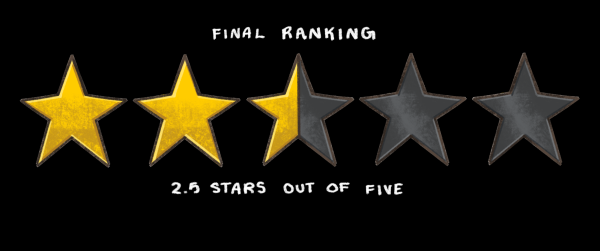
“Stranger Things” delivers occasional thrills, but uneven pacing and underdeveloped plotlines prevent the season from reaching its potential, earning a rating of 2.5 out of 5 stars. (Kathy Tang/The Talon) (Kathy Tang)

Though not received well by the public, the “Stranger Things” finale provides a purposeful and thematically consistent conclusion to the season. Television finales are the most pivotal part of a series, and can change what the whole trajectory of a show can feel like. Through this lens, viewers realize “Stranger Things” as not just a tale of a group of friends battling monsters but a cinematic allegory of our childhood.
Throughout “Stranger Things,” the mood of the series turns from dark and haunting to exciting and fun and finally into a valiant yet interpretive conclusion. Believe it or not, this mirrors our childhoods. We begin our youth worried about the outside world, yet learn to adjust to it while creating crazy stories and making friends along the way. As we grow older, these events once deemed “scary” become fun, adventurous and exciting. At the end of our childhood, we leave these adventures to enter the “real world,” yet the memories stay with us forever.
By finishing the series this way, the Duffer Brothers show that this beautiful series we all grew up with was teaching us a message all along: the power of friendship, love and loyalty in overcoming insurmountable odds, whether it be the Mind Flayer, or growing up.
“Stranger Things has been a show for a very long time, so it has also been a part of my life for a very long time,” junior Sophie Bi said. “Although the ending was seen as flawed, I’m still appreciative of the sentimentality of it and how it tied things all together.”
One controversy the series faced was killing off their main character, Eleven. Many believed Eleven’s death was just a shock value death. However, her passing symbolized much more. Eleven is introduced in the series to some as a threat and others as a savior. Yet, as the series continues, Eleven becomes adventurous, a friend and the embodiment of heroism.
The Duffer Brothers end the season with an “Inception”-esque conclusion, leaving the ending up to the interpretation of the audience. Eleven now becomes our wild imaginations we had as children; whether they leave us or we leave them, they will always play a pivotal role in adulthood.
Another popular controversy appeared when various fan theories started emerging throughout social media platforms about the show’s ending. These theories were contrary to the actual conclusion, because of their majorly misanthropic views.
“I think that they missed a lot of plot holes and there were a lot of fan theories that were better than what the Duffer Brothers wrote,” Bi said.
Many fans believed that the ending should have featured more deaths and gave the characters too much “plot armor,” yet don’t acknowledge the true meaning behind the beloved show. In our modern age, we associate too much “good cinema” with “deaths and action.” We are so used to the cynicism society holds that we forget a good story does not have to be filled with violence and suffering. Though we experience suffering in our lives, “Stranger Things” is a reminder that this suffering helps us learn and navigate our ways through future obstacles.
While people argue that “Stranger Things” relies excessively on nostalgic childhood imagery, the series deliberately uses sentimentality as a narrative device rather than as a shortcut. The 1980s setting, arcade games, bikes and synth music are not just added to romanticize the past, they create an emotional anchor for viewers.
Nostalgia in the series operates as connective tissue, allowing audiences to invest deeply in the characters’ relationships and stakes. Instead of relying on constant shock to maintain tension, the Duffer Brothers prioritize emotional continuity. The Upside Down is frightening, but what truly brings the narrative to a whole is the bond between the characters.
This philosophy reflects why “Stranger Things” resonated so deeply with audiences beyond its supernatural elements. By refusing to lean into nihilism, the Duffer Brothers preserved the core of the series: friendship, loyalty and hope. In a media space dominated by grimdark narratives and morally bleak endings, “Stranger Things” stands as intentionally sentimental, showing fans that sincerity and optimism is just as powerful than tragedy.
Unlike many modern television finales that rely on shock value and tragedy, the Duffer Brothers resist the idea that meaningful stories must end in devastation. “Stranger Things” defies this popular trajectory to reveal the true message of the show: Growing up means carrying your childhood imagination with you, not losing it. Childhood magic shapes who we become as adults, and “Stranger Things” captures that perfectly in its heroic and heartfelt series.
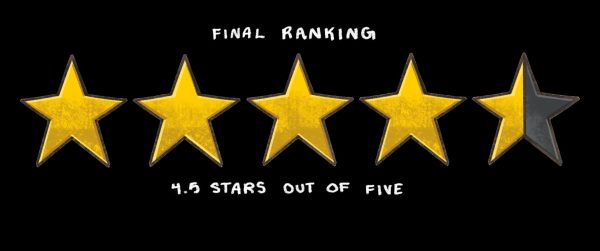
In the end, whether the “Stranger Things” finale satisfied fans depends on what viewers wanted the series to be. To some, the final season felt uneven and overextended, unable to fully recapture the simplicity that once defined it. To others, it served as a meaningful and fitting conclusion, honoring the friendships and growth that anchored the show from the start.
Either way, “Stranger Things” leaves behind a legacy that extends beyond Hawkins. For many, it marks the close of a formative chapter, a series that matured alongside its audience and helped define a generation of streaming television.
Your donation will support the student journalists of Oak Park High School - CA. Your contribution will allow us to purchase equipment and cover our annual website hosting costs.


