



This plant can be fatal to your pet, and it may be in your front yard


On Saturday, April 22, Chris Carter was taking his dog, Jackson, on their daily walk in Los Angeles County. Jackson is an energetic and playful pitbull mix. As he was sniffing around the bushes one of the plants gently brushed across his back. Unnoticed by both, Jackson and Carter continued on their walk, unaware that the plant he had just brushed against was highly toxic: the firestick plant.
The progression of the rash was slow at first, but then rapidly escalated.
“About 24 hours later I noticed two gash-like sores on Jackson’s upper back,” Carter said. “About an hour after noticing those wounds, I realized his entire body had broken out in hives.”
The first visit to the vet on Sunday was booked up, so Jackson was given Benadryl. Benadryl is the right first aid for the symptoms he showed: sores and scratching. But the plant’s toxicity was so severe that intensive treatment was required.
Monday morning, the sores that started around the size of a nickel grew to the size of silver dollars.
“His body felt extremely hot, he had a fever, his breathing was heavy, he wasn’t eating or drinking water and the hives were still covering his body,” Carter said.
On Carter’s second visit to the vet on Tuesday, Jackson was hospitalized for the night. He was given antibiotics, medications and fluids. After a $3,000 vet bill, Carter was told it would take Jackson at least three weeks to fully recover.
If Carter had not brought Jackson to the vet, their routine walk around the neighborhood could have ended unexpectedly.
“Based on how severe and quickly progressing his symptoms were, they told us the situation could have become fatal,” Carter said.

The firestick plant originated in South Africa and Madagascar. The plant is adapted to high temperatures and is fire resistant. These plants have the potential to grow up to eight feet in length and are five feet wide.
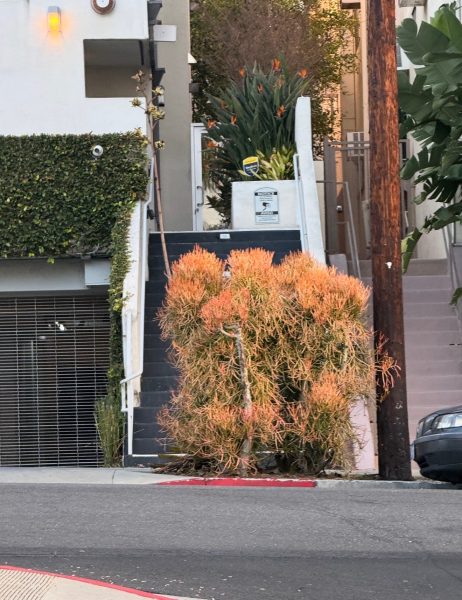
The plant is characterized by its bright coral-orange branches, pencil-thin stems, and striking fire-like appearance.
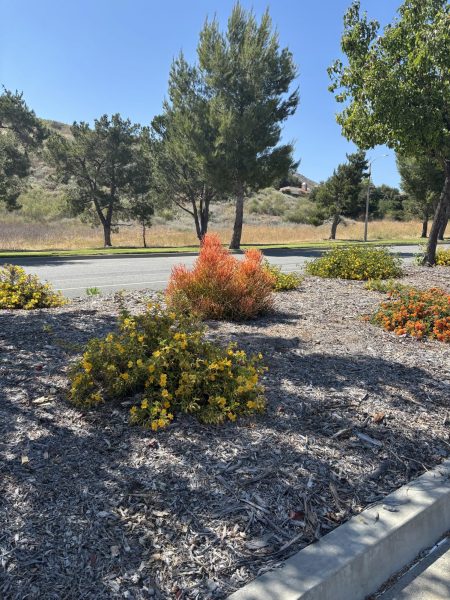
The plant is commonly sold in gardening stores, like Gardening Center, as “visually arresting,” resilient against arid conditions and “low-maintenance.”
“Many owners don’t realize the firestick plant is toxic because it’s widely sold and marketed as a low-maintenance ornamental,” Dr. Sara Vigue from Mountain View Animal Hospital in Simi Valley said.
Most home owners are unaware of the danger of putting fire sticks in their landscaping. Take a look around and you will see it lining neighborhood sidewalks, at the base of residential trail systems and even in front of elementary schools.
“At the time, I had absolutely no idea that the firestick plant was what caused his symptoms,” Carter said. “It wasn’t until after we brought him to our primary veterinarian that one of the technicians showed me a picture of a firestick plant and asked if we had them in our neighborhood.”

Fire stick exposure to animals is well-known among veterinarians.
“Exposure to fire stick plants isn’t an everyday case but it is common enough in this region that we stay very aware of it,” Vigue said.
While skin irritation is distressing, vets are most concerned about eye contact with the plant.
“If the sap gets in the eyes we will see squinting, redness and sometimes vision impairment,” Vigue said. “Symptoms usually begin within minutes to an hour after exposure but eye exposure can escalate very quickly.”
If left untreated, exposure could potentially leave your pet with permanent eye damage.
“Eye exposure is a major concern since the sap can cause corneal ulcers and if left untreated, can cause permanent vision loss,” Vigue said.
If ingested, Vigue advises calling Animal Poison Control Center immediately.
“With ingestion of the plant, severe irritation of the GI tract can lead to vomiting, abdominal pain and dehydration, so it is important to provide adequate supportive care to help your pet recover quickly. If a pet owner realizes their animal has bitten into a firestick, they should immediately call the ASPCA Animal Poison Control Center and call their local veterinarian to be seen immediately. At home, they can rinse the pet’s mouth with water if it is safe to do so.”
Symptoms typically show up within 24 hours. While it varies between cases, the most common signs in pets are excessive drooling, pawing at the face, vomiting, intense discomfort and inflammation of the skin where sap has contacted. Contact your veterinarian immediately if you notice these symptoms.

Fire plants are also controversial in the environment since they are considered an invasive species. The plant’s fast propagation and freedom from most natural predators makes it so that they can outcompete the native plants in the environment.
Fire stick plants’ latex sap can shift the food web for local insects and herbivores since these organisms have not adapted to this alien species’ toxicity.
“It would have a huge chain reaction on those local insects, unless they are somehow already adapted to being able to be unaffected by their toxic sap that they produce,” Oak Park High School AP Environmental Science teacher Allison Kerr said. “They’re going to be losing food sources and potentially unable to replace those food sources. So it’s going to have a chain reaction on not just the insects, but then the other trophic levels above the insects as well.”
In considering the injuries it causes to pets, the danger also extends to wildlife. Coyotes, rabbits, and other local animals can easily brush up against it and suffer the symptoms.
In order to prevent the spread of fire plants, use gloves and shovels to remove the plant from its root system.
“If they are starting to grow in the wild and you possess the tools, like gloves and shovels, when you see them in the wild, physically remove them,” Kerr said. “Not just cutting them down, but digging their roots out so they don’t have the ability to grow back. Educating people about the harmful impacts of them, and potentially providing alternative drought resistant plants that are also pretty could work.”

For homeowners who enjoy the “look” of the fire stick plant but want to protect their animals, plants such as the Haworthia, California Fuscia and the California Lilac serve as pet-safe, non-toxic native alternatives.
“If you’re seeking drought resistant plants, try to find local nurseries because they usually possess the most knowledgeable employees that can help you find the right kind of plants for your yard,” Kerr said.
While firestick plants can be sold at your local home improvement store or purchased online, steps can still be taken to minimize their harmful effects.
“I don’t think these plants need to be banned, but I do think there should be clear labeling and education where they are sold,” Vigue said. “Stores can label them as toxic to pets and offer safer alternative suggestions. Better awareness would go a long way in reducing accidental exposures.”
Fire stick plants are widely available but can be misleading, so it’s important to identify them quickly and prevent their spread.
“I had never even heard of the plant before Jackson’s incident,” Carter said. “Since then I’ve realized they are everywhere throughout Los Angeles and Ventura County. Now whenever I see people walking near these plants, I make sure to warn them about how toxic they are and encourage them to keep their dogs and children away from them. When I show people photos of what happened to Jackson, they are genuinely shocked. Most become very concerned that these plants are so common in such dog-friendly and child-friendly neighborhoods.”
Stories like Jackson’s may become increasingly common without the right preventative steps. Increasing awareness can help reduce the risk of future exposure.
“The hardest part was seeing our dog in pain while not having clear answers about what was causing it,” Carter said. “Jackson is incredibly sweet, affectionate and full of personality, so watching that completely fade away was extremely upsetting and concerning.”
Fortunately, homeowners can take simple steps to stop their spread. Experts recommend using protective gear to safely remove existing plants. Check out these resources to learn the exact steps for how to safely remove and dispose of the fire stick plant.
Your donation will support the student journalists of Oak Park High School - CA. Your contribution will allow us to purchase equipment and cover our annual website hosting costs.


